← Back to Start Here: New Dog Journey
Getting a dog can be one of the best decisions you make, when your schedule, budget, and support system are ready. This step is a practical “reality check” so you adopt at the right time and set your future dog up to win.
Key takeaways
- This isn’t about being perfect, it’s about being prepared.
- If you’re missing one major requirement, the best move is usually delay or foster, not “hope it works out.”
- Your #1 success factor is daily routine consistency, not expensive gear.
The 60-second readiness check
If you answer “no” to two or more items, pause and consider fostering or waiting.
- Housing: pets allowed (and you understand fees/restrictions)?
- Time: you can handle walks/potty breaks/training every day?
- Money: you can cover monthly care + surprise vet costs?
- Support: you have a backup person (or budget) for travel/sick days?
- Patience: you’re ready for accidents, noise, and a learning curve?
Time reality check (what a dog actually needs)
These are rough ranges. Some dogs need more, some less, especially puppies and high-energy breeds.
- Daily basics: 60-120 minutes total (potty + exercise + feeding + quick cleanup)
- Training: 5-10 minutes/day (tiny sessions add up fast)
- Enrichment: 10-20 minutes/day (sniffing, licking, puzzles, chew time)
- Social needs: regular attention and calm companionship
Big question: how long will your dog be alone?
- If your dog will be alone 8-10 hours most days, your plan must include mid-day help (walker, neighbor, daycare, or work flexibility).
- If you travel often, budget for boarding or a sitter before you adopt.
Budget reality check (plan for normal + surprise costs)
Costs vary by city, dog size, and health. The goal is to avoid adopting “on a financial cliff.”
Monthly basics (typical categories)
- Food
- Preventives (flea/tick, heartworm if recommended by your vet)
- Grooming (depends on coat type)
- Treats + chews and enrichment
- Training tools (gear and enrichment that supports training)
One-time or occasional costs
- Adoption fee
- Initial vet visit and vaccines if needed
- Crate/gate/playpen (management tools)
- Harness/leash/ID setup
- Enzyme cleaner for accidents
Emergency cushion (non-negotiable)
- Aim for an emergency plan: either a savings cushion you won’t touch or pet insurance that fits your budget.
- Even healthy dogs can have sudden issues (injury, stomach blockage, infections).
Lifestyle fit: what kind of dog can you realistically support?
Be honest here. This step prevents adopting a dog you love in theory but can’t support in reality.
- Activity level: do you want a hiking buddy or a couch buddy?
- Noise tolerance: barking and whining happen during adjustment.
- Mess tolerance: shedding, muddy paws, accidents (especially early on).
- Social life: do you have time to train and stabilize before lots of visitors/trips?
If you’re not ready (good news: you still have options)
- Foster: lower-commitment way to learn and help a dog now.
- Volunteer: shelter walks and enrichment shifts teach you a lot fast.
- Pet sit: test-drive routines without long-term commitment.
- Wait 30-60 days: use the time to fix one blocker (housing, budget cushion, schedule).
Gear to consider
Don’t buy everything today, this is just what tends to matter for success.
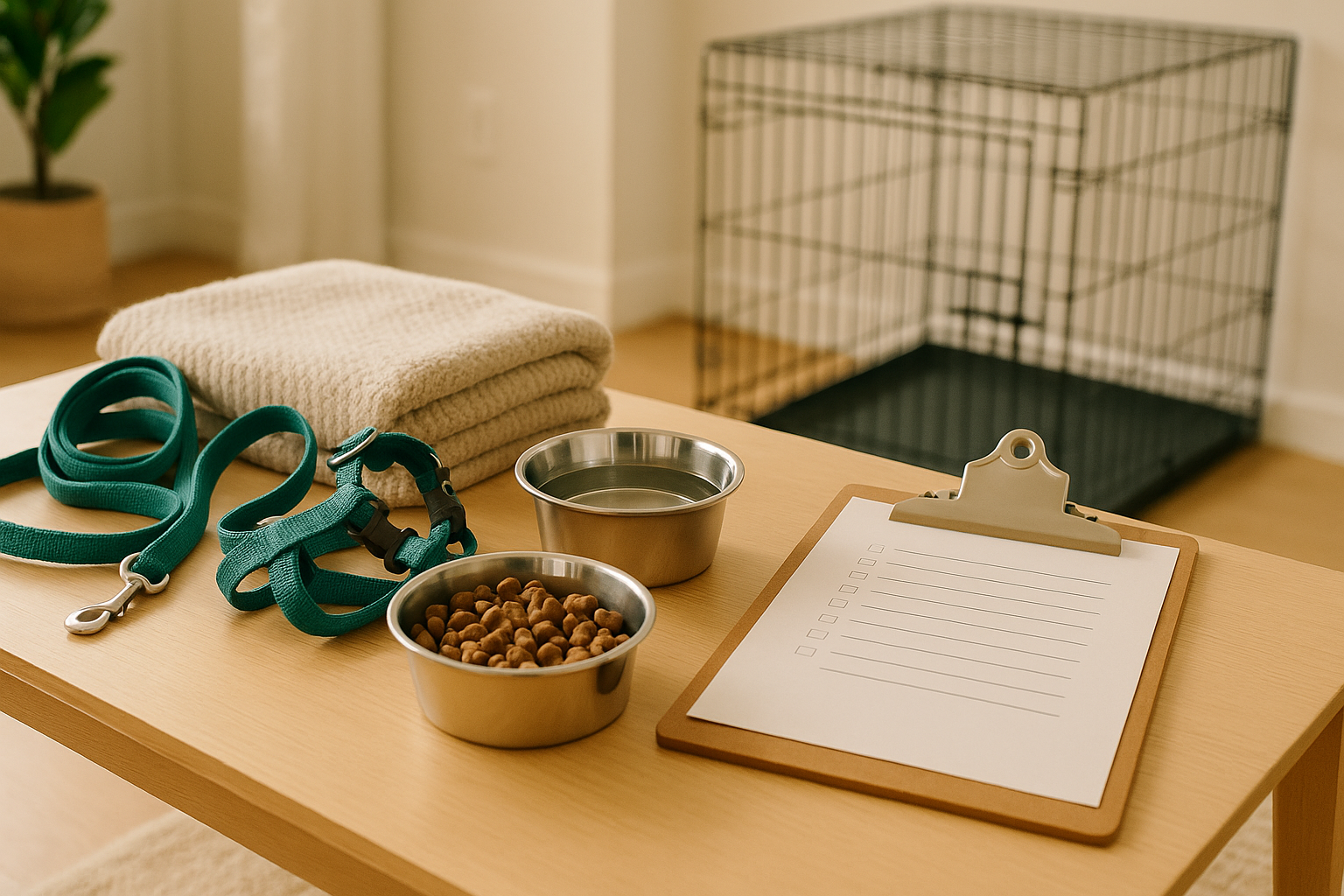
Management tools: baby gate / playpen / crate (prevents chaos and builds routine).
Walking safety: properly fitted harness + leash.
Cleanup: enzyme cleaner (accidents happen).
Enrichment: lick mat or stuffed toy for calm settling.
Next step
Go to Step 2 → Choose the Right Dog for Your Home (energy, size, temperament)
Last reviewed: January 2026