← Back to Start Here: New Dog Journey
New dog shopping can get out of hand fast. This checklist focuses on what actually matters for safety, routine, and a calmer first month, without buying a cart full of “nice-to-have” items.
Key takeaways
- Buy the minimum first. Add extras after you learn your dog.
- Management tools (gates/pen/crate) prevent most early chaos.
- Use calm enrichment (lick/chew/sniff) to help your dog settle.
- Get ID and walking safety right on Day 1.
The “buy first” essentials (before you bring your dog home)
Walking + safety
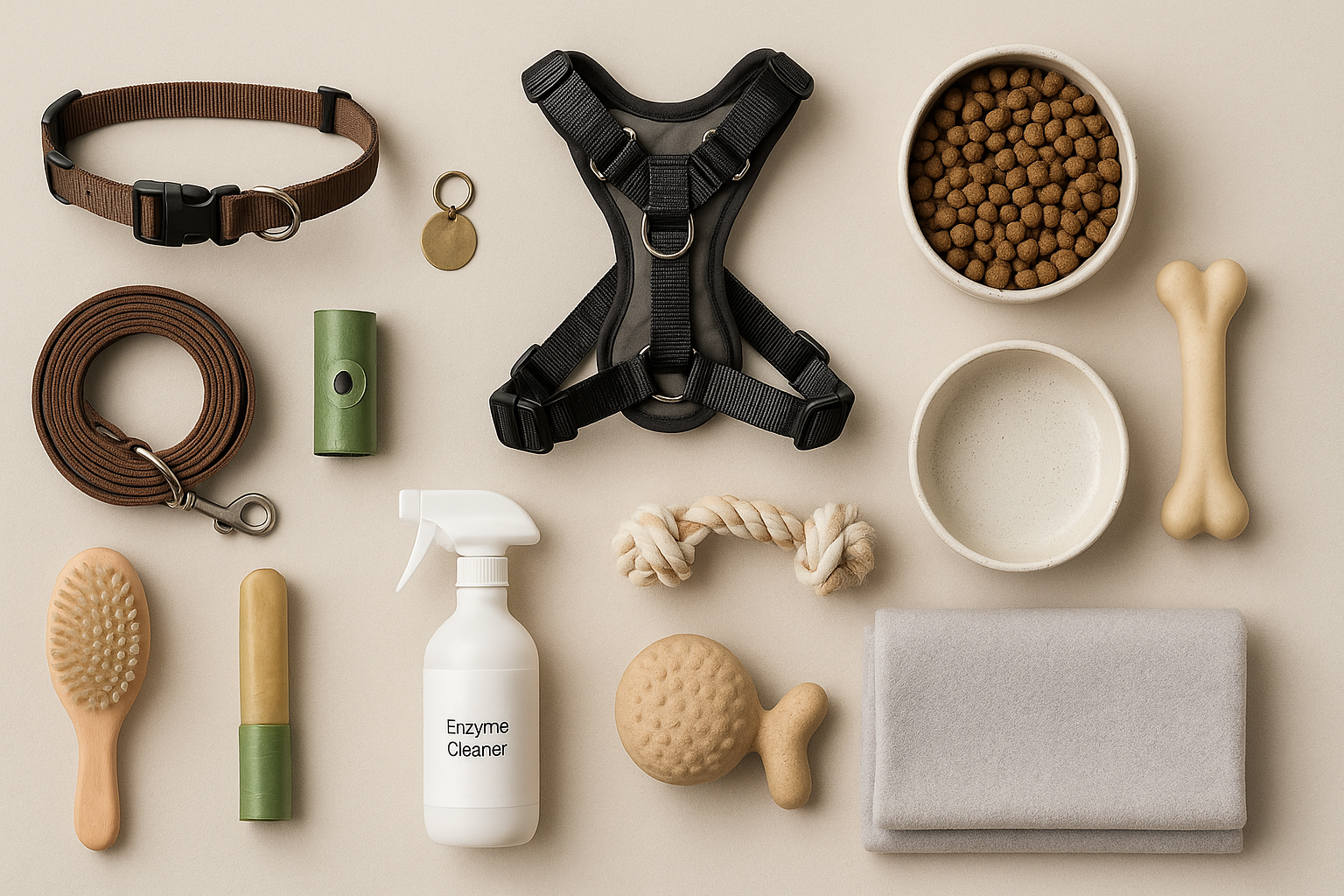
- Leash: standard 4-6 ft leash (skip retractables in the first month).
- Harness: secure fit and comfortable movement.
- Collar + ID tag: tag with your phone number (and address if you want).
- Poop bags: keep them by the door and in your walking bag.
Home management (prevents most problems)
- Baby gate or playpen: creates a calm zone and limits accidents/chewing.
- Crate (optional): useful if introduced slowly and positively (not as punishment).
- Bed/blanket: simple, washable, and placed in a quiet area.
Feeding basics
- Food: ideally the same as the shelter/rescue used for the first week.
- Bowls: one food bowl, one water bowl (easy to clean).
- Treats: small training treats (soft is often easier).
- Optional slow feeder: helpful for fast eaters.
Cleanup + hygiene
- Enzyme cleaner: non-negotiable for accidents (prevents repeat marking).
- Paper towels + trash bags: boring but essential.
- Old towels: muddy paws, wet dogs, car rides.
Calm enrichment (settling tools)
- Lick option: lick mat or a simple frozen lick on a plate.
- Chew option: durable chew toy matched to your dog’s chewing style.
- Sniff option: snuffle mat or scatter feeding in a safe area.
Don’t overbuy
Your dog’s preferences (toy style, chew strength, bed type, food tolerance) become obvious after a week or two. Start simple, then upgrade intentionally.
The “buy soon” list (week 1-2)
- Grooming basics: brush/comb that matches coat type.
- Nail tool: nail clippers or grinder (go slow and reward).
- Food storage: sealed container to keep food fresh.
- Car protection: seat cover and towel; consider a car safety restraint.
- Long line (10-20 ft): for recall practice and safe exploration (outdoors only).
Optional upgrades (after month 1)
- More enrichment: puzzle feeder, extra lick mats, toy rotation.
- Training tools: treat pouch, clicker (optional), training mat.
- Weather gear: paw protection, coat, cooling gear depending on your climate.
- Bed upgrades: once you know what your dog likes and how they use it.
How to choose the right sizes (quick tips)
- Harness: measure chest girth; prioritize secure fit and shoulder freedom.
- Collar: two-finger fit; tag should not dangle too low.
- Crate: enough room to stand, turn around, and lie down comfortably.
- Chews/toys: size up if unsure; replace toys that crack or shed pieces.
Common shopping mistakes (avoid these)
- Buying a ton of toys before you know what your dog enjoys
- Skipping management tools and hoping “training will fix it” later
- Buying retractable leashes for a brand-new dog
- Using random household cleaners instead of enzyme cleaner for accidents
- Overfeeding with treats and enrichment (plan calories)
Gear to consider
Don’t buy everything today, this is just what tends to matter for success.
Secure harness + leash: safe control on Day 1.
Baby gate / playpen: the fastest way to prevent chaos.
Enzyme cleaner: the most important “unsexy” purchase.
Calm enrichment: lick mat or fillable toy for settling.
Next step
Step 5: How to Find a Dog (Shelters, Rescues, Foster Networks, Listings).
Last reviewed: January 2026